The World's Most Unusual Borders and Political Territories
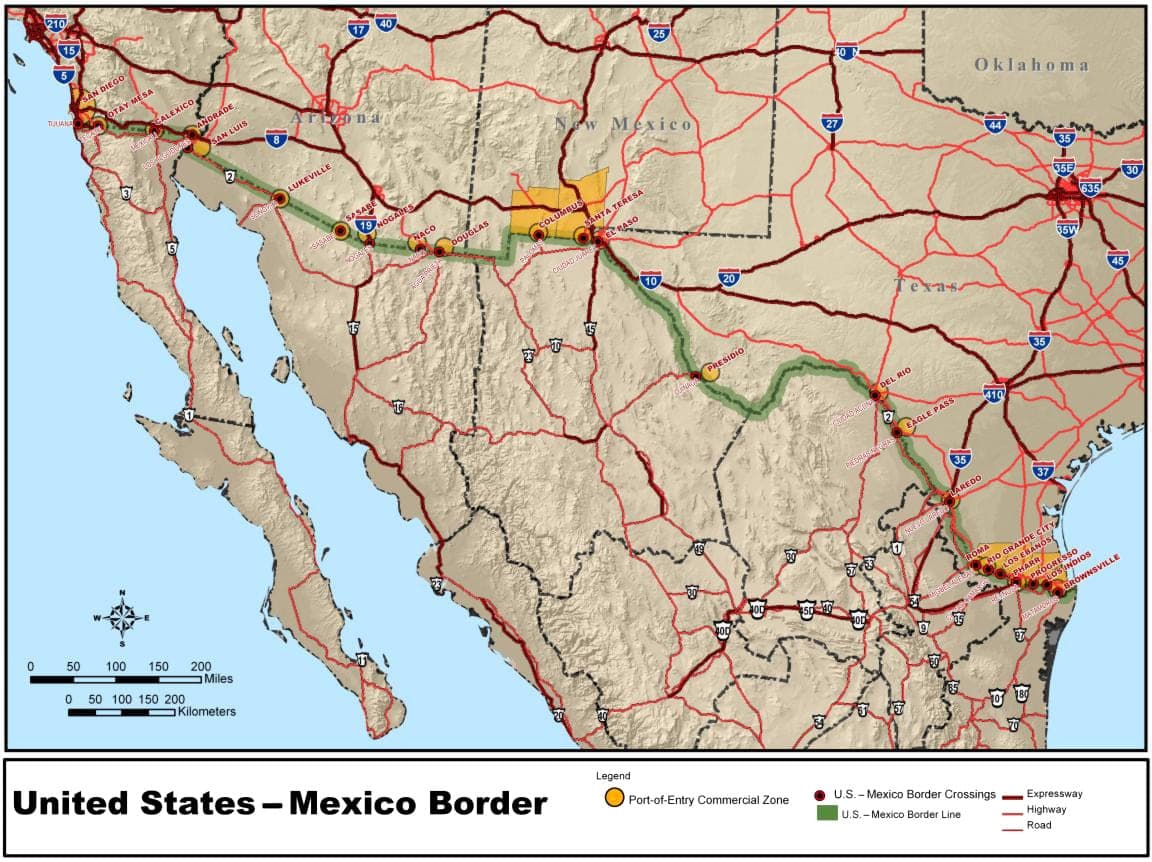
The world map is full of peculiarities — borders that seem to make no sense, countries entirely surrounded by other countries, territories thousands of kilometres from their parent state, and political arrangements so complex they require diagrams to explain. These are the world's most fascinating geographical and political curiosities.
Countries Within Countries — Enclaves and Exclaves
An enclave is a territory entirely surrounded by the territory of another country. The most famous examples are Vatican City and San Marino, both entirely surrounded by Italy, and Lesotho, entirely surrounded by South Africa. These are fully sovereign nations that happen to be geographically enclosed by their neighbours.
An exclave is a portion of a country separated from the main body. Russia's Kaliningrad is a fascinating example — it is a Russian exclave on the Baltic Sea, bordered by Lithuania and Poland, completely cut off from mainland Russia. It was once the German city of Königsberg and was taken by the Soviet Union in 1945. Russia's Kaliningrad has no land connection to Russia and can only be reached by crossing two EU member states.
Vatican City — an independent country entirely surrounded by Rome, Italy
The World's Most Complex Border: Baarle
The village of Baarle, on the border between Belgium and the Netherlands, has one of the most extraordinary border situations on Earth. The village consists of 26 pieces of Belgian territory (Baarle-Hertog) scattered within Dutch territory (Baarle-Nassau). Some Belgian enclaves are themselves surrounded by Dutch territory, which contains other Belgian enclaves — making some of them triple enclaves. The border runs through houses, shops and restaurants. In some buildings, the nationality changes from room to room, marked by a line on the floor.
The World's Newest Country: South Sudan
South Sudan became the world's newest independent country on July 9, 2011, after voting for independence from Sudan. It was created following a long and devastating civil war and a 2011 referendum in which 98.83% of voters chose independence. Unfortunately, South Sudan quickly descended into its own civil war, and the country has faced severe humanitarian challenges since independence. As of 2025, it remains the world's newest internationally recognised sovereign state.
Disputed and Partially Recognised Countries
Not all countries are recognised by all other countries. Kosovo declared independence from Serbia in 2008 and is recognised by over 100 countries including the USA, UK and most of the EU — but not by Serbia, Russia, China or several other nations. Taiwan functions as an independent state with its own government, military and currency, but is claimed by China and only formally recognised by a small number of countries. Palestine is recognised as a state by over 140 countries but not by Israel or the United States.
Overseas Territories Far From Home
Several countries have territories located thousands of kilometres away from the main country. France has the most extensive overseas territories of any nation, including French Guiana in South America (which shares a land border with Brazil), Reunion and Mayotte in the Indian Ocean, Martinique and Guadeloupe in the Caribbean, and French Polynesia and New Caledonia in the Pacific. These are not colonies — they are legally part of France and their residents are French citizens.
- •France — Has territories on 5 continents including French Guiana, Reunion, Martinique
- •United Kingdom — British Overseas Territories including Gibraltar, Falkland Islands, Bermuda
- •United States — Territories including Puerto Rico, Guam, US Virgin Islands
- •Denmark — Controls Greenland (world's largest island) and the Faroe Islands
- •Norway — Controls Svalbard (Arctic territory) and Bouvet Island (most remote on Earth)
- •Netherlands — Caribbean islands of Aruba, Curaçao and Sint Maarten
The World's Divided Nations
Some nations are formally divided into two separate states. Korea was divided in 1945 and remains divided at the 38th parallel, with the Democratic People's Republic of Korea (North Korea) and the Republic of Korea (South Korea) still technically at war. Germany was divided from 1949 to 1990 into East and West Germany. Cyprus has been divided since 1974 when Turkey occupied the northern third of the island, creating the internationally unrecognised Turkish Republic of Northern Cyprus.
The World's Only Country Within a Capital City
Vatican City is the world's smallest country at just 0.44 km², and uniquely, it sits entirely within the city of Rome. Vatican City has been an independent state since the Lateran Treaty of 1929, when Mussolini's government and the Catholic Church agreed to create the independent city-state in exchange for the Church's recognition of the Italian state. It has its own government (led by the Pope), its own bank, its own radio station and its own postal system.
Countries That No Longer Exist
- •Yugoslavia — Split into 7 countries: Slovenia, Croatia, Bosnia, Montenegro, Serbia, Kosovo, North Macedonia
- •Soviet Union — Dissolved in 1991 into 15 independent countries
- •Czechoslovakia — Peacefully split into Czech Republic and Slovakia in 1993
- •East Germany — Reunified with West Germany in 1990
- •South Vietnam — Reunified with North Vietnam in 1976
- •Ottoman Empire — Dissolved after WWI into Turkey and many Middle Eastern nations
- •British Indian Empire — Independence in 1947 created India and Pakistan; Bangladesh separated in 1971
Many of these unusual countries and territories feature in our quizzes — from the flags of tiny island nations to the capitals of newly independent states. Test your knowledge at MyGeoQuiz!